Group for electromagnetic compatibility and numerical methods in electronics

MULTIMOD

group leader

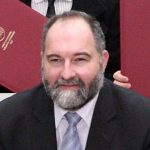
prof. Dragan Poljak, PhD

associates

prof. Zoran Blažević, PhD
prof. Tonko Garma, PhD
prof. Silvestar Šesnić, PhD
assoc. prof. Mario Cvetković, PhD
assoc. prof. Vicko Dorić, PhD
assoc. prof. Maja Škiljo, PhD
assist. prof. Antonio Šunjerga, PhD
assist. prof. Anna Šušnjara Nejašmić, PhD

other researchers

Klementina Vidjak, PhD

Group description

The research activities of the MULTIMOD group focus on advanced numerical modelling and experimental methods for the analysis of complex multiphysics engineering problems. The group develops theoretical formulations together with analytical and numerical solution methods in several interdisciplinary research areas, including bioelectromagnetics, electromagnetic-thermal dosimetry (with a particular emphasis on 5G systems), biomedical applications of electromagnetic fields, ground-penetrating radar, plasma physics, fusion technologies, space technologies, accelerator systems, wireless power transfer, electromagnetic compatibility, and stochastic processes in advanced communication networks.

Expertise and know-how

  • Electromagnetic field theory
  • Numerical methods in engineering
  • Deterministic and stochastic modelling of multiphysics problems
  • Electromagnetic compatibility (EMC), antennas and propagation, grounding systems, and ground-penetrating radar
  • Human exposure to electromagnetic radiation and electromagnetic-thermal dosimetry
  • Biomedical applications of electromagnetic fields
  • Plasma physics
  • Thermonuclear fusion and tokamak plasma equilibrium
  • Neutron beam analysis in accelerator systems
  • Stochastic electromagnetics, uncertainty quantification, and sensitivity analysis

Research infrastructure

Laboratories

  • Radio Propagation Laboratory
    The laboratory conducts measurements of RF devices, antennas, and radio-wave propagation. It is equipped with computers, oscilloscopes, function generators, EMC probes, spectrum analyzers, signal generators, Tesla coils, a ground-penetrating radar prototype, and a variety of antenna systems.
  • Numerical Methods Laboratory
    The laboratory includes six workstations and a high-performance computing workstation equipped with a dedicated GPU for advanced numerical simulations.

Equipment

  • Anritsu Spectrum Analyzer MS2711E, operating from 9 kHz to 3 GHz, with a dynamic range exceeding 85 dB (at 100 Hz RBW)
  • Anritsu Vector Network Analyzer MS2026C, dual-port configuration, operating from 9 kHz to 6 GHz

Key projects and references

  • Human Exposure to Radiation from new Wireless CommunicationTechnologies using Advanced Electromagnetic-Thermal Dosimetry Models (HERWICT) – Slovenian-Croatian Project (HRZZ)
  • IFMIF DONES: WPENS AS (Accelerator Systems) – Sensitivity analysis of the uncertainty propagation in static and dynamic simulations of neutron flux within Test Cell, (EUROfusion)
  • IFMIF DONES: WPENS PI (Project Integration) – EMI/EMC Analysis of Electric and Electronic Equipment in IFMIF-DONES, (EUROfusion)
  • Simulation and Protective Design of Electromagnetic Radiation in Offshore Wind Power Based on Semi-Analytical Methods (Croatian-Chinese bilateral project)
  • Research on Intelligent Operation and Maintenance Strategies for Wind Power Equipment with Low Electromagnetic and Noise Pollution (Croatian-Chinese bilateral project)

Collaboration opportunities

  • Multidisciplinary research in multiphysics, plasma physics, and environmental physics
  • Integration of conventional deterministic-stochastic computational models with artificial intelligence (AI), digital twins, machine learning (ML), and physics-informed neural networks (PINNs), including the development of efficient surrogate models
  • Multidisciplinary research in bioelectromagnetics, environmental protection from unwanted electromagnetic exposure, and the development of biomedical devices such as biosensors, transcranial magnetic stimulation (TMS), transcranial electrical stimulation (TES), and neurostimulation systems (TENS and PENS)
  • Assessment and measurement of non-ionizing radiation sources and their environmental impact, including applications in national and international standardization, development of specialized software, expert consulting, and optimization of service quality and safety aspects of 5G and 6G mobile communication systems
  • Studies of electromagnetic compatibility, antenna systems, grounding systems, ground-penetrating radar, and cylindrical waveguides, with applications in air traffic management and maritime communication systems
  • Analysis and optimization of wireless power transfer systems
  • Measurement and environmental impact assessment of non-ionizing radiation sources
  • Thermal performance assessment and heating analysis of power cables